
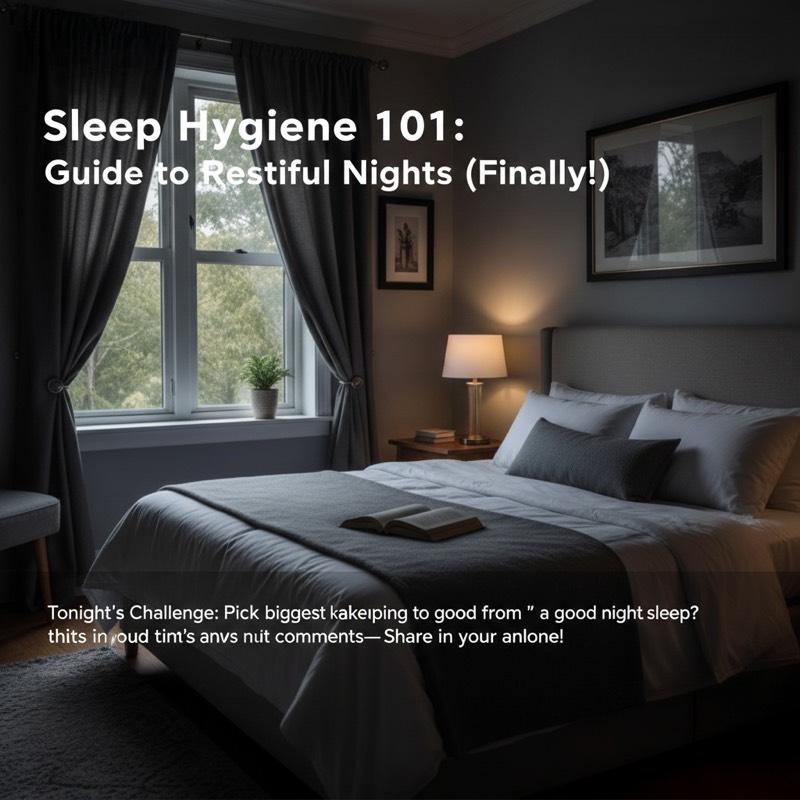
We often treat sleep like an optional luxury, but it is actually a biological necessity-just like food and water. Poor sleep doesn't just make you tired; it increases anxiety, lowers your immune system, and clouds your decision-making.
"Sleep Hygiene" isn't about being clean; it's about the habits and environmental factors that signal to your brain it is safe to shut down. Here are five evidence-based tips to help you master the art of rest.
1. Consistency is King (The "Anchor" Time)
Your body has an internal clock called the Circadian Rhythm. This clock thrives on predictability. If you go to bed at 10 PM on weekdays but 2 AM on weekends, your brain suffers from "social jetlag."
- The Goal: Go to bed and wake up at the same time every day-even on weekends.
- The Benefit: Eventually, you will start to feel naturally tired at the right time and wake up feeling more refreshed without an alarm.
2. Optimize Your "Sleep Sanctuary"
Your bedroom should be used for only two things: sleep and intimacy. If you work from your bed or watch intense movies there, your brain begins to associate the bed with alertness and stress.
The Ideal Environment:
- Temperature: Aim for cool (around 65°F or 18°C). A drop in core body temperature is a biological trigger for sleep.
- Light: Invest in blackout curtains or a sleep mask. Even the tiny LED light from a charger can disrupt your deep sleep cycles.
- Sound: Use a white noise machine or a fan to drown out unpredictable neighborhood noises.
3. The "90-Minute" Caffeine Cutoff
Caffeine has a half-life of about 5 to 6 hours. This means if you have a cup of coffee at 4 PM, half of that caffeine is still buzzing in your system at 10 PM.
- The Rule: Try to have your last caffeinated drink at least 8-10 hours before you plan to sleep.
- The Alternative: Switch to herbal teas like chamomile or peppermint in the afternoon to soothe your digestive system.
4. Mindful Decompression (The Power Down)
You cannot expect your brain to flip from "high-speed productivity" to "deep sleep" like a light switch. You need a transition period.
The Routine: Spend the 30-60 minutes before bed doing something low-stimulation.
- Read a physical book (no e-readers with blue light).
- Journal your "Worry Time" thoughts so they aren't swirling in your head.
- Listen to soft music or a guided sleep meditation.
5. Watch Your "Liquid" Intake
While a "nightcap" (alcohol) might help you fall asleep faster, it actually destroys the quality of your sleep. Alcohol prevents you from entering REM sleep, which is the restorative stage where your brain processes emotions.
- The Tip: Limit alcohol and heavy meals within 3 hours of bedtime to prevent indigestion and frequent wake-ups.
The "Can't Sleep?" Rule
If you've been lying in bed for more than 20 minutes and can't fall asleep, get out of bed. Go to another room, keep the lights low, and do something boring (like folding laundry or reading a manual) until you feel sleepy. This prevents your brain from associating your bed with the frustration of being awake.
What is one thing you do every night that helps you fall asleep?